Mechanical vs. Hydraulic Disc Brakes: Key Differences & Benefits
Brake systems are one of the most critical safety components of a bicycle. Today, mechanical and hydraulic brake systems are the most commonly used types. Understanding the differences between these two systems helps riders choose the most suitable option for their intended use.
Mechanical Brake Systems
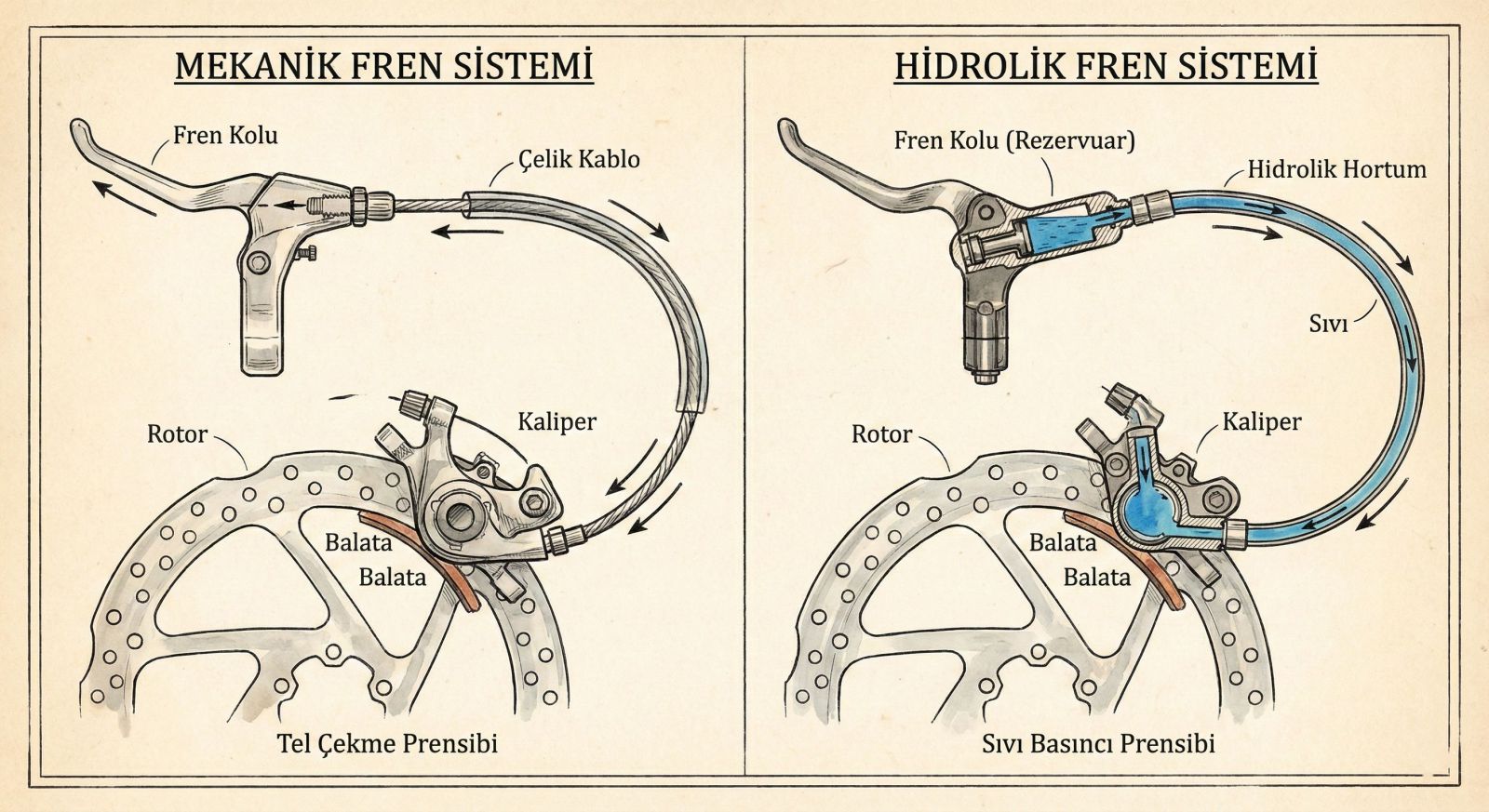
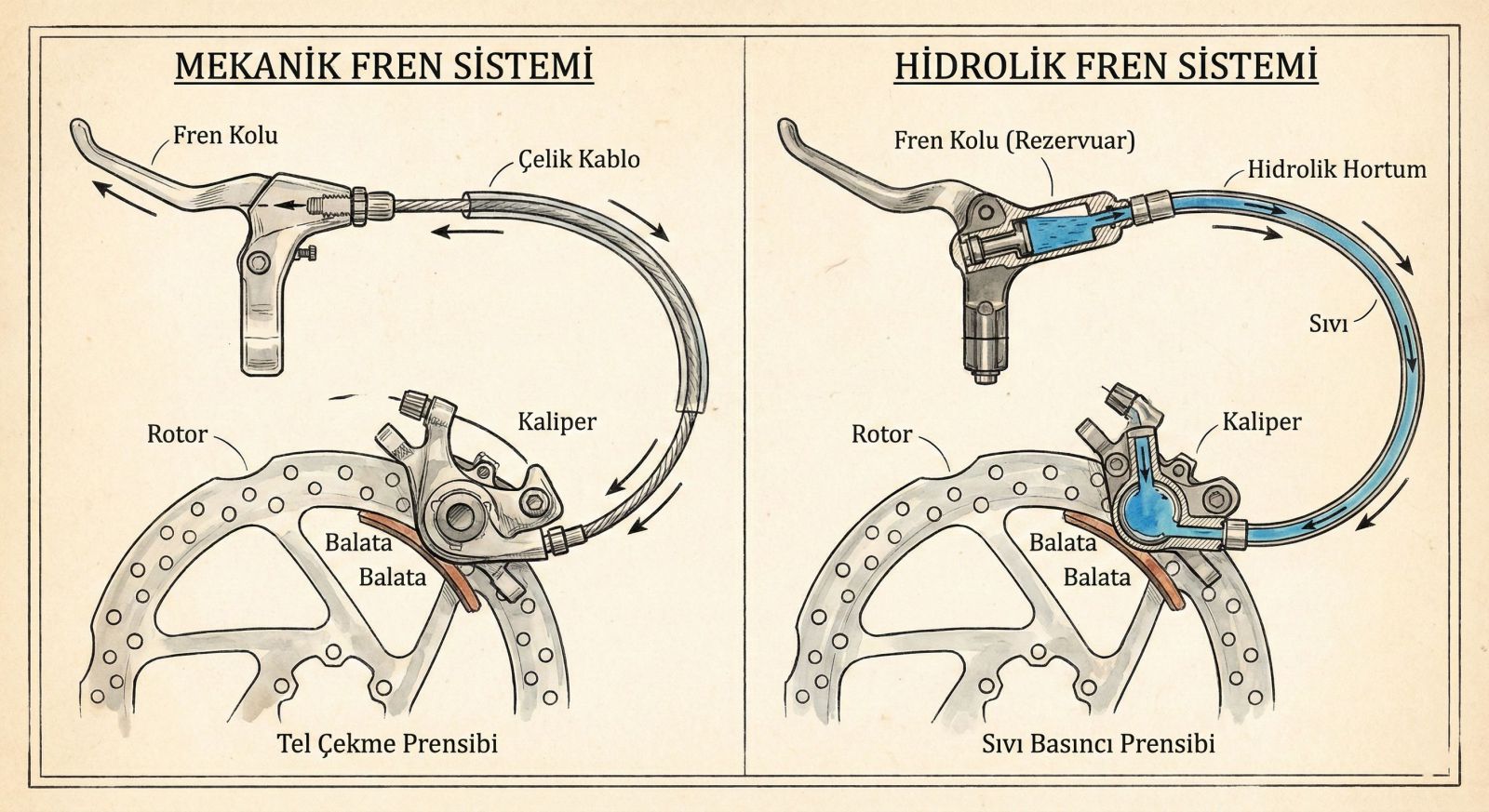
Mechanical brakes transmit force from the brake lever to the brake pads through a cable. Thanks to their simple structure, maintenance and adjustment procedures are relatively easy.
Key features of mechanical brakes include:
-
Easy adjustment
-
Low maintenance costs
-
Sufficient braking power for urban riding
However, during long descents, wet conditions, or high-speed riding, they require more hand force compared to hydraulic systems.
Hydraulic Brake Systems
Hydraulic brakes operate using fluid pressure within a sealed system. This design provides more consistent and powerful braking performance.
Advantages of hydraulic brakes include:
-
More precise and powerful braking
-
High performance with less hand effort
-
Long-lasting performance with minimal need for adjustment
These systems are commonly preferred for mountain bikes, performance-oriented riding, and challenging terrain conditions.
Choosing the Right Brake System
Selecting the right brake system depends on riding style, bicycle type, and frequency of use. While mechanical brakes are generally sufficient for daily urban riding, hydraulic brakes are better suited for riders who prioritize performance and maximum safety.